

If you have spent any time online lately, you have probably seen the term AI everywhere. It is on the news, in your apps, and everyone seems to have an opinion about it.
But when you actually ask "what is AI," most explanations are confusing. They use technical words that make no sense to regular people.
So let me answer the question "what is AI" in plain English. No jargon. No complicated stuff. Just a simple conversation about what this technology actually is and why it matters to you.
What Is AI in Simple Words?
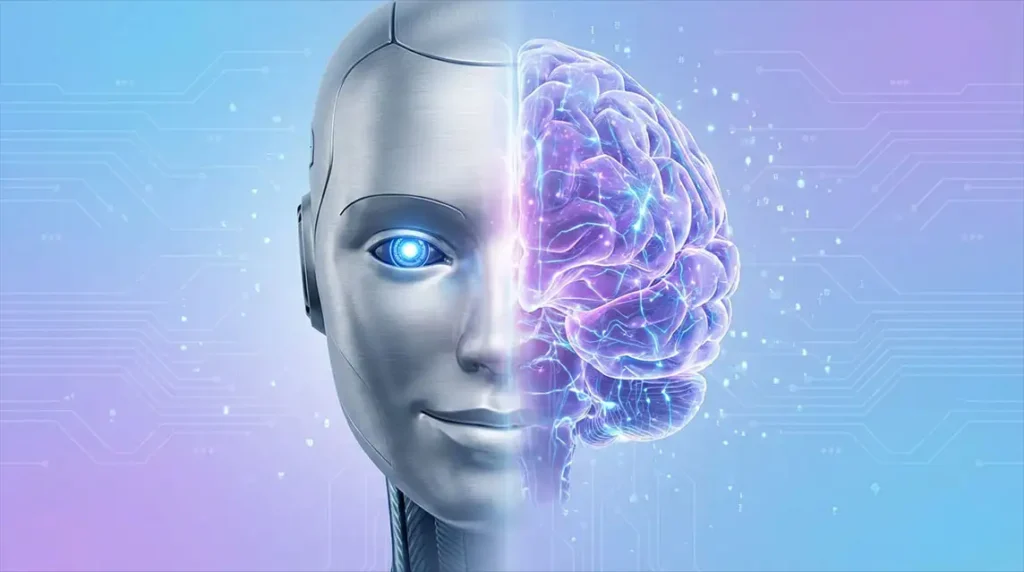
AI stands for Artificial Intelligence. Let me break those two words down for you.
Artificial means something humans created. It is not natural. Intelligence means the ability to learn, think, and solve problems.
So what is AI when you put those words together? It is when we build computer systems that can do things we usually think require human smarts.
But here is what AI is not. It is not a robot with feelings. It is not a computer that thinks like you and me. It is not magic or science fiction.
Think of AI as really clever software. Instead of following a strict set of instructions, it learns from examples. You show it thousands of pictures of dogs, and eventually it figures out how to recognize a dog in a new photo it has never seen before.
That is the basic answer to what is AI. Nothing more mysterious than that.
What Is AI Compared to Regular Software?
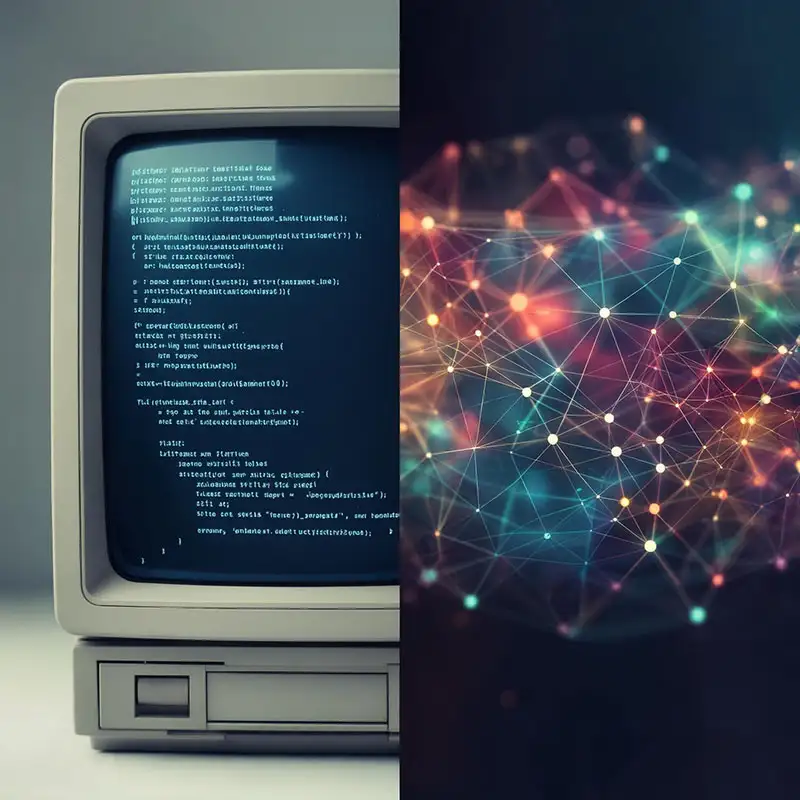
To truly understand what is AI, it helps to compare it with normal computer programs. Think about a calculator on your phone. When you type 5 plus 3, it gives you 8. Every single time. That is because someone wrote exact rules telling it what to do. The calculator does not learn anything. It just follows orders.
Now think about how Netflix recommends movies to you. Nobody sat down and wrote rules like "if this person watched three action movies, suggest another action movie." That would take forever and would not work well anyway.
Instead, Netflix uses AI. The system looks at what you watched, what you liked, and what millions of other people enjoyed. It finds patterns. Then it makes a guess about what you might want to watch next.
So what is AI in this context? It is software that learns from data instead of following fixed rules. That is the key difference.
What Is AI Doing in Your Daily Life?
Here is something that might surprise you. You probably use AI dozens of times a day without realizing it.
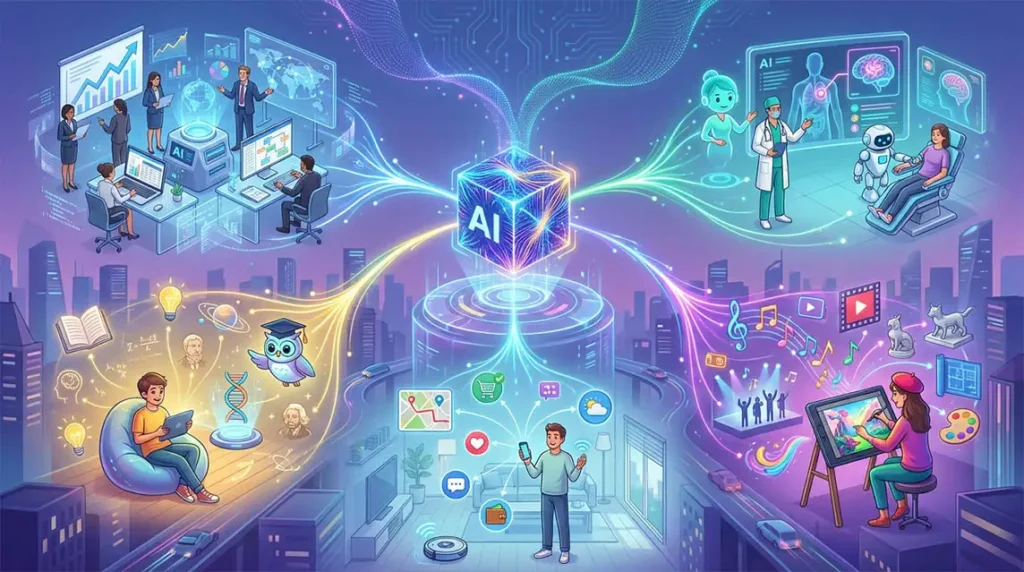
When you unlock your phone with your face, that is AI recognizing you. When you type a message and your phone suggests the next word, that is AI predicting what you want to say. When you ask Siri or Google Assistant a question, AI is understanding your voice and figuring out an answer.
On social media, AI decides what posts show up in your feed. It watches what you like, comment on, and scroll past. Then it shows you more of what it thinks you will enjoy.
When you shop online, those product suggestions saying "you might also like this" are powered by AI. Same with the ads that seem to follow you around the internet.
Even your email uses AI to filter out spam before you see it. Maps apps use AI to predict traffic and find the fastest route home.
Understanding what is AI becomes much easier when you realize it is already woven into your daily life. It has been for years. The difference now is that it has gotten much better and much more visible.
What Is AI Getting So Much Attention For?
AI has been around for decades. So why all the excitement now?
A few things happened at once.
First, we now have way more data than ever before. Every time you use the internet, shop online, or post on social media, you create data. AI needs data to learn, and now there is more of it than anyone could have imagined.
Second, computers got much faster and cheaper. Training AI used to require expensive machines that only big companies could afford. Now it is much more accessible.
Third, researchers made breakthroughs in how AI learns. A technique called deep learning made AI much more powerful at recognizing images, understanding language, and creating content.
Finally, companies realized AI could make them money. So they invested billions of dollars into developing it.
All of this gave us tools like ChatGPT and image generators that regular people can actually use. That is why it feels like AI exploded overnight and why everyone is suddenly asking what is AI.
What Is AI Actually Good At?
Let me be honest about what AI can and cannot do. This will help you understand it better.
AI is really good at handling huge amounts of
information. A human doctor might see a few hundred X-rays in their career. An AI can analyze millions. This helps it spot patterns that humans might miss.
AI is great at repetitive tasks. It does not get bored, tired, or distracted. It can process the same type of work thousands of times without making fatigue mistakes.
AI is fast. It can make predictions in milliseconds. That is why it can recommend products, filter spam, and translate languages almost instantly.
And AI keeps improving. The more data it sees, the better it gets at its job.
What Is AI Bad At?
Now here is the flip side. Understanding what is AI also means knowing its serious limitations.
AI does not understand things the way you do. It recognizes patterns, but it does not truly know what anything means. It has no life experience, no common sense, and no real understanding of the world.
AI cannot handle new situations it was not trained for. If you show a chess AI a completely different game, it is lost. It only knows what it has been taught.
AI makes mistakes. Sometimes confident sounding mistakes. It might write something that sounds perfectly reasonable but is completely wrong. Experts call these hallucinations.
AI has no morals or values of its own. It does not know right from wrong. It just does what it was trained to do based on the data it was given.
And here is the tricky part. AI can inherit biases from its training data. If the data contains unfair patterns, the AI learns those patterns too. This has caused real problems in hiring systems, loan approvals, and other areas.
What Is AI in Different Forms?

When asking what is AI, you should know there are different types. You do not need to memorize technical terms. But knowing a few basics helps.
Narrow AI is the kind we actually have today. This means it is good at one specific thing but cannot do anything else. Your spam filter is narrow AI. It filters spam brilliantly but cannot help you cook dinner.
General AI would be a system that can learn anything a human can learn and apply that knowledge flexibly. This does not exist yet. It might be decades away or might never happen. Nobody really knows.
Generative AI is what made headlines recently. This is AI that creates new content. It can write articles, make pictures, compose music, and write computer code. Tools like ChatGPT and image generators fall into this category.
What Is AI Doing to Jobs?
This is the question on everyone's mind when they ask what is AI going to mean for work. The honest answer is that nobody knows for sure.
AI will probably not replace entire jobs overnight. But it will change jobs. Tasks that are repetitive, predictable, and data-heavy are easiest for AI to handle.
However, humans still have skills that AI lacks. Empathy, creativity, ethical judgment, leadership, and the ability to navigate messy real-world situations. These become more valuable as AI handles the routine stuff.
Many experts believe AI will become a tool that makes workers more productive rather than replacing them entirely. The people who learn to work alongside AI will likely have an advantage.
What Is AI Risking?

Understanding what is AI means being aware of its problems too. Privacy is a big concern. AI can track faces, analyze voices, and build detailed profiles of your behavior. This data can be used to help you, but it can also be used to manipulate or surveil you.
Misinformation is another problem. Generative AI makes it easy to create fake images, fake videos, and fake news articles. It is getting harder to tell what is real.
Bias in AI systems can cause real harm. If an AI is trained on biased data, it can make unfair decisions about hiring, lending, policing, and more.
And there is the risk of over-trusting AI. Some people assume that because a computer said something, it must be correct. This is dangerous, especially for important decisions about health, money, or legal matters.
How to Use AI Wisely
Now that you understand what is AI, here is how to use it smartly. You do not need to be a tech expert. You just need some common sense.
Treat AI like a helpful assistant, not an authority. Let it help you draft ideas, find information, and speed up boring tasks. But make the final decisions yourself.
Double-check important information. If AI gives you health advice, legal tips, or financial guidance, verify it with a real expert or trusted source.
Protect your privacy. Be careful what personal information you share with AI tools. Read privacy settings. Think before you upload sensitive documents.
Stay curious. The more you understand about what is AI and how it works, the better you can use it and protect yourself from its downsides.
What Is AI Going to Mean for the Future?
AI is not going away. It will become a normal part of apps, devices, schools, and workplaces. Understanding what is AI will be as important as understanding how to use the internet.
In the coming years, AI will likely get better at understanding language and images. Governments will create more rules around it. And it will become a standard tool in most industries.
But remember this. AI is a tool built by humans, trained on human data, and used for human purposes. It reflects our choices, our biases, and our goals.
The technology is powerful, but human judgment still matters. Maybe now more than ever.
So what is AI in the end? AI is software that learns from data to recognize patterns, make predictions, and create content. It is a powerful tool that already affects how we work, shop, learn, and connect.
AI is not a human brain. It is not a magical mind reader. It is not a perfect source of truth.
For regular people, understanding what is AI is less about coding and more about knowing how it shows up in your life and using it wisely.
Now when someone asks you what is AI, you can explain it clearly and confidently. That understanding puts you ahead of most people who are still confused by the buzzwords.
Thank You!
Best 10 gadgets
What Is AI? A Simple Guide for Regular People
If you have spent any time online lately, you have probably seen the term AI...
Study With AI For Free – 7 Powerful Tools Every Student Should Know!
Studying is changing fast. You no longer have to sit alone with a heavy textbook...